

After the Storm: A Homeowner's Complete Guide to Hail Damage Roof Identification and Emergency Steps
You know that sound. The rhythmic, then chaotic, drumming of ice against your windows and roof. When a serious hailstorm rolls through Snohomish County, the first feeling is relief when it stops. The second, a knot of anxiety in your stomach as you look outside and wonder, "Is my roof okay?"
It's a stressful moment. Your home is your sanctuary, and the roof is its primary defender. Suddenly, you're faced with a dozen questions you never thought you'd have to ask. Is that little dent a big deal? What's the difference between cosmetic and real damage? Do I call my insurance? Who can I trust to give me a straight answer?
Take a breath. You've come to the right place.
This guide is designed to be your calm, clear-headed partner in the aftermath of the storm. We're not here to sell you anything; we're here to give you the information you need to make smart decisions. Drawing on over 30 years of combined experience right here in the Pacific Northwest, we'll walk you through exactly how to assess the situation, what immediate steps to take, and how to navigate the often-confusing world of insurance claims.
Let's get your peace of mind back.
Your First 60 Minutes: An Immediate Action Checklist
Panic can lead to hasty decisions. Before you do anything else, follow these three simple steps.
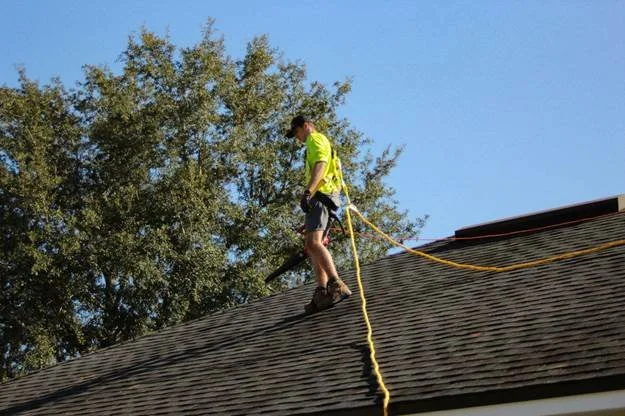
Prioritize Safety. Do Not Get on Your Roof. We can't say this enough. A storm-damaged roof can be unstable, wet, and covered in loose granules, making it incredibly slippery. A fall can be catastrophic. All initial inspections can and should be done from the ground.
Document Everything. Grab your phone and walk around your property. Take photos and videos of any visible damage, not just to the roof but to "collateral" items. We'll cover this more below, but think gutters, siding, window screens, air conditioning units, and even your car. Note the date and time of the storm. This documentation is crucial for your insurance claim.
Make Two Calls. Your first call should be to a trusted, local roofing professional for an inspection. Your second call should be to your insurance agent to inform them of the potential damage. A good roofer can help you understand the extent of the damage before the adjuster arrives, giving you a knowledgeable advocate from day one.
And here's a crucial piece of information to ease your mind: most hail damage does not cause an immediate leak. As roofing expert Bill Ragan notes, it's a problem that compromises the lifespan of your roof, not usually its immediate ability to keep water out. So, you have time to act deliberately.
How to Spot Hail Damage From the Safety of the Ground
You don't need to be a roofing expert to do a preliminary check. You just need to know what to look for. The key is to look for a pattern of damage across your property. Insurance adjusters call this "collateral damage," and it's the best evidence that a hail event was severe enough to affect your roof.
Start by looking at the soft metals around your home:
Gutters and Downspouts: Are there small, random dents?
Air Conditioner Fins: These thin aluminum fins are easily damaged. Are they flattened or pockmarked?
Window Screens & Siding: Check for tears in screens or dents and cracks in vinyl siding.
Mailbox or Grill: Any dents on your mailbox, gas grill lid, or patio furniture?
If you see consistent denting on these items, it's a strong indicator that your roof likely sustained damage as well.
Reading the Signs on Asphalt Shingles
Asphalt shingles are the most common material for residential roofing in our area, and they show hail damage in specific ways. From the ground, you might see dark spots or areas that look like bruises.
Here's what's happening on a closer level:
Bruising or Dents: Hail impacts will look like dark, circular spots where the granules have been knocked off. The mark might feel soft or spongy to the touch, like a bruise on an apple.
Granule Loss: Those tiny, sand-like particles on your shingles are their first line of defense against UV rays and weather. You might see an accumulation of these black granules in your gutters and downspouts after a storm. This is a tell-tale sign of impact.
Cracking: In more severe cases, you might see cracks in the shingle, often in a circular or spiderweb pattern around the point of impact.
Unlike normal wear and tear, which looks uniform, hail damage is characterized by its randomness. There's no consistent pattern, just sporadic impacts across the slope of the roof that faced the storm.
What to Look For on Metal and Wood Roofs
Metal Roofing: Damage here is usually more obvious—it looks like dents. The key is to assess the severity. Minor cosmetic denting may not compromise the roof, but deep dents can break the protective finish, leading to rust, or even create micro-fissures that allow water intrusion. If you have a metal roofing system, a professional inspection is essential to determine if the damage is purely cosmetic or functional.
Wood Shingles/Shakes: Hail can cause wood to split. Look for fresh splits that are brown or orange in color, unlike older splits which will have turned gray from weathering. You might also see impact marks or dents in the wood.
Cosmetic vs. Functional Damage: The Distinction That Defines Your Insurance Claim
This is where things get technical, but it's probably the single most important concept to understand. Your insurance company is primarily concerned with functional damage.
Forensic engineering firms like Haag Global, who set the industry standard, define functional damage as anything that "diminishes the water-shedding capability or reduces the expected long-term service life of the roof."
Here's what that means in plain English:
Cosmetic Damage: This is a blemish that doesn't affect the roof's ability to do its job. Think of a small, shallow dent in a metal roof that doesn't break the paint finish, or a minor scuff on a shingle. It's ugly, but it doesn't compromise the system.
Functional Damage: This is an injury that has broken through the roof's defenses. A hail strike that cracks a shingle, exposes the underlying fiberglass mat, or removes enough granules to accelerate UV degradation is functional damage. It has started a countdown timer on that shingle's life.
Think about it this way: a scratch on your car's paint is cosmetic. A crack in your windshield is functional.
Why does this matter? Insurance policies are designed to pay for functional damage—the kind that will lead to bigger problems down the road. They are often reluctant to pay for damage that is purely cosmetic. A professional roofer can help you identify true functional damage and provide the evidence needed to support your claim.
The Silent Threat: How Minor Hail Damage Escalates Over Time
Okay, so you see a few dark spots on your shingles. The roof isn't leaking. Why the urgency? Because hail damage is a slow-motion problem. It creates a weak point that the elements will exploit over time.
Here's the progression of an untreated hail strike on an asphalt shingle:
Impact & Granule Loss: The hailstone hits, knocking off the protective granules and bruising the asphalt layer.
UV Exposure: The newly exposed asphalt is now vulnerable to the sun's UV rays. The sun essentially begins to cook this spot, making the asphalt brittle and weak.
Cracking & Delamination: As the seasons change and your roof expands and contracts with temperature, the brittle spot begins to crack. Water seeps into these tiny cracks, freezes, expands, and widens the fissure. This can cause layers of the shingle to separate, a process called delamination.
Water Intrusion: Eventually, the crack becomes large enough to allow water to penetrate through the shingle to the underlayment and roof deck.
Interior Damage: Once the decking is saturated, you'll see the dreaded water spots on your ceiling. By this point, you're not just dealing with a roof repair; you're looking at potential mold, damaged insulation, and drywall repair.
What started as a small, seemingly harmless bruise can become a catastrophic failure in 18-24 months. This is why addressing hail damage promptly isn't just about fixing a current problem—it's about preventing a much larger, more expensive one in the future.
Emergency First Aid for Your Roof: Safe, Temporary Fixes
If you discover an active leak after a storm, the priority is to minimize interior damage. Again, stay off the roof. The immediate actions you can take are all from inside or from the ground.
Contain the Water: If water is dripping into your home, place a bucket underneath it. If the ceiling is bulging, it may be holding a significant amount of water. You can carefully puncture the center of the bulge with a screwdriver to release the pressure in a controlled way. It's better to have a small hole to patch than a collapsed section of drywall.
Check the Attic: If you can safely access your attic, go up with a flashlight during the day and look for wet spots on the insulation or the underside of the roof deck. You can also see daylight through any holes. This can help you pinpoint the source of the leak.
Call for an Emergency Tarping: If you have a significant leak, your best bet is to call a professional for an emergency tarping. Tarping a roof is dangerous and, if done incorrectly, can cause more damage by trapping moisture or channeling water to the wrong places. A professional crew can secure a tarp safely, protecting your home until a permanent repair can be made. Most insurance policies cover the cost of these temporary, preventative measures.
Navigating the Insurance Maze: A Step-by-Step Guide
For many homeowners, dealing with the insurance company is more daunting than the damage itself. But with a little knowledge, you can navigate the process with confidence.
Step 1: The Initial Call. Contact your agent and open a claim. They will assign you a claim number and an adjuster.
Step 2: The Adjuster's Inspection. The adjuster will schedule a time to visit your property and assess the damage. It is highly recommended to have your chosen roofing contractor present for this meeting. The roofer acts as your advocate, ensuring that all functional damage is properly identified and documented. They speak the same language as the adjuster and can point out things the adjuster might otherwise miss.
Step 3: The Estimate. The adjuster will compile a report detailing the scope of the damage and the estimated cost of repairs. This is often created using specialized software like Xactimate.
Step 4: The Payout. Once the claim is approved, you will receive payment. This is where understanding your policy type becomes critical.
ACV vs. RCV: Understanding Your Payout
This is a big one. Your policy will either be for Actual Cash Value (ACV) or Replacement Cost Value (RCV).
Replacement Cost Value (RCV): This is the gold standard. RCV policies pay to replace your roof with brand-new, similar materials at today's prices. The payout usually comes in two checks. The first check is the ACV (the value of your old roof, minus depreciation). Once you complete the repairs and provide the roofer's invoice, the insurance company releases the second check for the remaining amount (the "depreciation").
Actual Cash Value (ACV): An ACV policy pays for the value of your damaged roof as it was before the storm. Think of it like the trade-in value of a used car. If your roof is 15 years old, the policy will only pay for the value of a 15-year-old roof. This means you will have a significant out-of-pocket expense to cover the difference for a new roof.
Knowing which policy you have sets realistic expectations for the financial side of your repair.
Preparing for the Adjuster's Visit
Have your documentation ready: Provide your photos and any notes you took.
Ensure the area is safe and accessible.
Have your contractor meet the adjuster: This creates a unified front and ensures a fair assessment. Your contractor can mark hail hits with chalk so they are easy for the adjuster to see and photograph.
Choosing the Right Partner: How to Avoid "Storm Chasers"
After a big storm, you'll see an influx of out-of-town roofing companies, often called "storm chasers." They knock on doors, offer suspiciously low prices, and pressure you into signing contracts on the spot.
Look, I get it. It's tempting. But working with these companies is a huge risk. They often use substandard materials, perform shoddy work, and are gone as soon as the work is done, leaving you with no one to call when problems inevitably arise.
Here's how to spot a trustworthy, local contractor:
They're Local: Do they have a physical address in Snohomish, Skagit, or King County? A long-standing local reputation is your best guarantee of accountability.
They're Properly Licensed and Insured: Ask for proof of their Washington state license and liability insurance. This protects you if a worker is injured on your property.
They Don't Pressure You: A true professional will provide a detailed inspection and estimate, then give you time to make a decision. High-pressure sales tactics are a major red flag.
They Have Stellar Reviews: Check their ratings on the Better Business Bureau, GuildQuality, and Google.
They Offer a Free, No-Obligation Inspection: Reputable companies are confident in their expertise and are happy to provide a free estimate to earn your business.
Your relationship with your roofer doesn't end when the last shingle is nailed down. It should be a long-term partnership with a company that will be there to stand behind their work for years to come.
Frequently Asked Questions About Hail Damage
Is it worth filing a claim for minor damage?
It depends on your deductible and the extent of the functional damage. If the repair cost is only slightly more than your deductible, it might not be worth it. A trustworthy roofer can give you an honest assessment of the costs, helping you make an informed financial decision.
Will filing a hail claim make my insurance premium go up?
Generally, no. Hail damage is considered an "Act of God," and most state regulations prevent insurance companies from raising an individual's rates for a single weather-related claim. However, if an entire area experiences a high volume of claims, the company may raise rates for everyone in that region.
How long do I have to file a claim?
Most insurance policies have a statute of limitations, often one year from the date of the storm. However, it's always best to act quickly to prevent the damage from worsening.
Can a roofer cover my deductible?
Be very wary of any contractor who offers to "waive" or "cover" your deductible. This is often a sign that they are cutting corners elsewhere or, in some cases, committing insurance fraud by inflating the claim. It's an unethical practice and a huge red flag.
Your Path Forward
The aftermath of a hailstorm can feel overwhelming, but it doesn't have to be. By taking a calm, methodical approach—prioritizing safety, documenting the evidence, and partnering with a trusted local expert—you can turn a moment of anxiety into a confident plan of action.
Your roof did its job. It took the brunt of the storm to protect your family and your home. Now, it's time to give it the attention it needs to keep doing that job for years to come.
If you have any questions or would like a professional, no-pressure opinion on the state of your roof, please don't hesitate to contact us. We're your neighbors, and we're here to help.